openai/gpt-5.2 📝❓🖼️🔢 → 📝
About
The best model for coding and agentic tasks across industries
Example Output
"Explain this paradox through a mathematical proof"
Input Images
Output
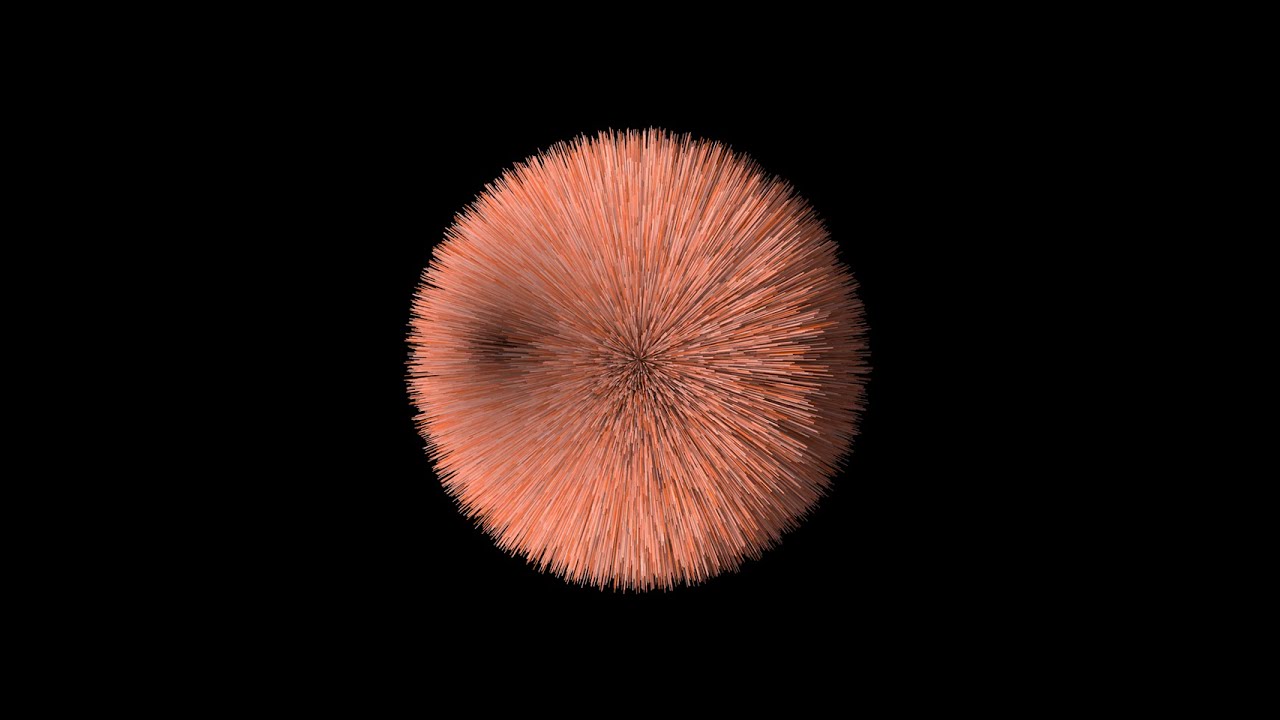
The picture is the usual “ball” associated with the Banach–Tarski paradox:
In (\mathbb{R}^3), a solid ball can be cut into finitely many disjoint pieces and, using only rotations and translations, reassembled into two solid balls each congruent to the original.
This is not a contradiction in mathematics; it relies on the Axiom of Choice and uses pieces that are non‑measurable (so “volume” is not defined for them in the usual sense). Below is a proof outline with the key mathematical steps.
Theorem (Banach–Tarski, 1924)
Let (B\subset\mathbb{R}^3) be a solid ball. Then (B) can be partitioned into finitely many disjoint sets
[
B = P_1 \sqcup P_2 \sqcup \cdots \sqcup P_n
]
such that there exist rigid motions (g_1,\dots,g_n) and (h_1,\dots,h_n) with
[
B = \bigsqcup_{i=1}^n g_i(P_i)
\quad ext{and}\quad
B = \bigsqcup_{i=1}^n h_i(P_i),
]
so the same pieces form two copies of (B).
Proof idea in four steps
1) A free group sits inside the rotation group (SO(3))
There exist two rotations (A,B\in SO(3)) such that the subgroup they generate is isomorphic to the free group on two generators:
[
\langle A,B\rangle \cong F_2.
]
Intuition: choose rotations about different axes by angles that are incommensurable with (\pi). Then no nontrivial “word” in (A,B) equals the identity, so there are no relations—exactly the definition of freeness.
So we have an action of (F_2) on the sphere (S^2) by rotations.
2) The free group (F_2) is “paradoxical” (group-level decomposition)
A group (G) is called paradoxical if it can be split into pieces that can be shifted (by group multiplication) to cover the whole group in two disjoint ways.
For (F_2=\langle a,b\rangle), define subsets by reduced words:
- Let (X) be the set of reduced words beginning with (a),
- let (X^{-}) begin with (a^{-1}),
- let (Y) begin with (b),
- let (Y^{-}) begin with (b^{-1}),
and include the identity (e) in (say) (X^{-}).
Then we have a disjoint partition
[
F_2 = X \sqcup X^{-} \sqcup Y \sqcup Y^{-}.
]
Now observe the key equalities (left-multiplication shifts initial letters):
[
aX^{-} = X, \qquad a^{-1}X = X^{-}\setminus{e}
]
and similarly
[
bY^{-} = Y, \qquad b^{-1}Y = Y^{-}\setminus{e}.
]
From these, one can rearrange to get a “doubling” in the sense that two disjoint unions of translates cover the whole group. Concretely, there exist disjoint subsets (A,B\subset F_2) such that
[
F_2 = A \sqcup aA = B \sqcup bB
]
(with disjointness), which is the algebraic core of the paradox.
This is the “mathematical engine”: (F_2) can be split and duplicated by shifts.
3) Transfer the group paradox to the sphere using the Axiom of Choice
Consider the action of (F_2) (identified with (\langle A,B\rangle\subset SO(3))) on the sphere (S^2).
Some points have finite orbits under the action (these correspond to points fixed by some nontrivial rotation). Collect all such exceptional points into a set (E). It turns out (E) is countable.
For every remaining orbit (which is infinite), use the Axiom of Choice to choose one representative point from each orbit. Call the chosen set (C\subset S^2\setminus E).
Then every point in (S^2\setminus E) can be written uniquely as (g\cdot c\ (g\in F_2,\ c\in C)), so:
[
S^2\setminus E ;=; \bigsqcup_{g\in F_2} gC.
]
Now apply the paradoxical decomposition of (F_2) from Step 2:
if (F_2 = A\sqcup aA = B\sqcup bB), then multiplying the index set of the disjoint union gives
[
S^2\setminus E
= \Big(\bigsqcup_{g\in A} gC\Big);\sqcup;\Big(\bigsqcup_{g\in aA} gC\Big)
= \Big(\bigsqcup_{g\in A} gC\Big);\sqcup;a\Big(\bigsqcup_{g\in A} gC\Big),
]
and similarly with (B,b).
So (S^2\setminus E) splits into finitely many pieces that can be rotated to form two copies of (S^2\setminus E).
Finally, because (E) is countable, one can “absorb” it into one of the pieces (this is a standard set-theoretic trick: countably many points can be redistributed using finitely many rigid motions), yielding a decomposition of the entire sphere (S^2).
4) Extend from the sphere to the solid ball
Write the ball as “rays from the center”:
[
B = {, r\cdot x \mid x\in S^2,\ 0\le r\le 1 ,}.
]
A rotation of (S^2) naturally induces a rotation of the whole ball by rotating each ray.
Take the sphere pieces (P_i\subset S^2) from Step 3 and define the corresponding ball pieces
[
\widetilde P_i := {, r\cdot x : x\in P_i,\ 0\le r\le 1 ,}.
]
These (\widetilde P_i) partition (B), and the same rotations that duplicate the sphere pieces also duplicate the ball pieces, giving two congruent copies of (B).
That completes the proof outline.
Why this isn’t a contradiction to “volume is conserved”
The pieces in the decomposition are not Lebesgue measurable, so “volume” is not defined for them in the standard theory. The usual statement “rigid motions preserve volume” applies to measurable sets (or nicely behaved ones), and these pieces are far from that.
So the paradox is really:
- Set theory + Axiom of Choice allows extremely wild subsets of (\mathbb{R}^3).
- For those sets, “volume” cannot be assigned consistently while staying compatible with rigid motions and countable additivity.
If you tell me whether you want the full formal group-theoretic proof (paradoxicality (\Rightarrow) equidecomposability) or a more geometric version (using explicit rotations on the sphere), I can write it at the level you prefer.
Performance Metrics
All Input Parameters
{
  "prompt": "Explain this paradox through a mathematical proof",
  "messages": [],
  "verbosity": "medium",
  "image_input": [
    "https://replicate.delivery/pbxt/ODVBQndN3nwPX4gqp6gElSqOyWh52524GUI6zPQOpwGi626n/maxresdefault.jpg"
  ],
  "reasoning_effort": "medium"
}
Input Parameters
- prompt
- The prompt to send to the model. Do not use if using messages.
- messages
- A JSON string representing a list of messages. For example: [{"role": "user", "content": "Hello, how are you?"}]. If provided, prompt and system_prompt are ignored.
- verbosity
- Constrains the verbosity of the model's response. Lower values will result in more concise responses, while higher values will result in more verbose responses. Currently supported values are low, medium, and high. GPT-5 supports this parameter to help control whether answers are short and to the point or long and comprehensive.
- image_input
- List of images to send to the model
- system_prompt
- System prompt to set the assistant's behavior
- reasoning_effort
- Constrains effort on reasoning for GPT-5.2 models. Supported values are none, low, medium, high, and xhigh.
- max_completion_tokens
- Maximum number of completion tokens to generate. For higher reasoning efforts you may need to increase your max_completion_tokens to avoid empty responses (where all the tokens are used on reasoning).
Output Schema
Output
Example Execution Logs
Model variant: gpt-5.2
Input token count: 705
Output token count: 1968
 - Reasoning tokens: 268
Total token count: 2673
TTFT: 0.46s
Version Details
- Version ID
e805d0794e42cc941a20b67ef7e57e432a7e4abdd36d61dbc6c842e911a75ec4- Version Created
- December 11, 2025